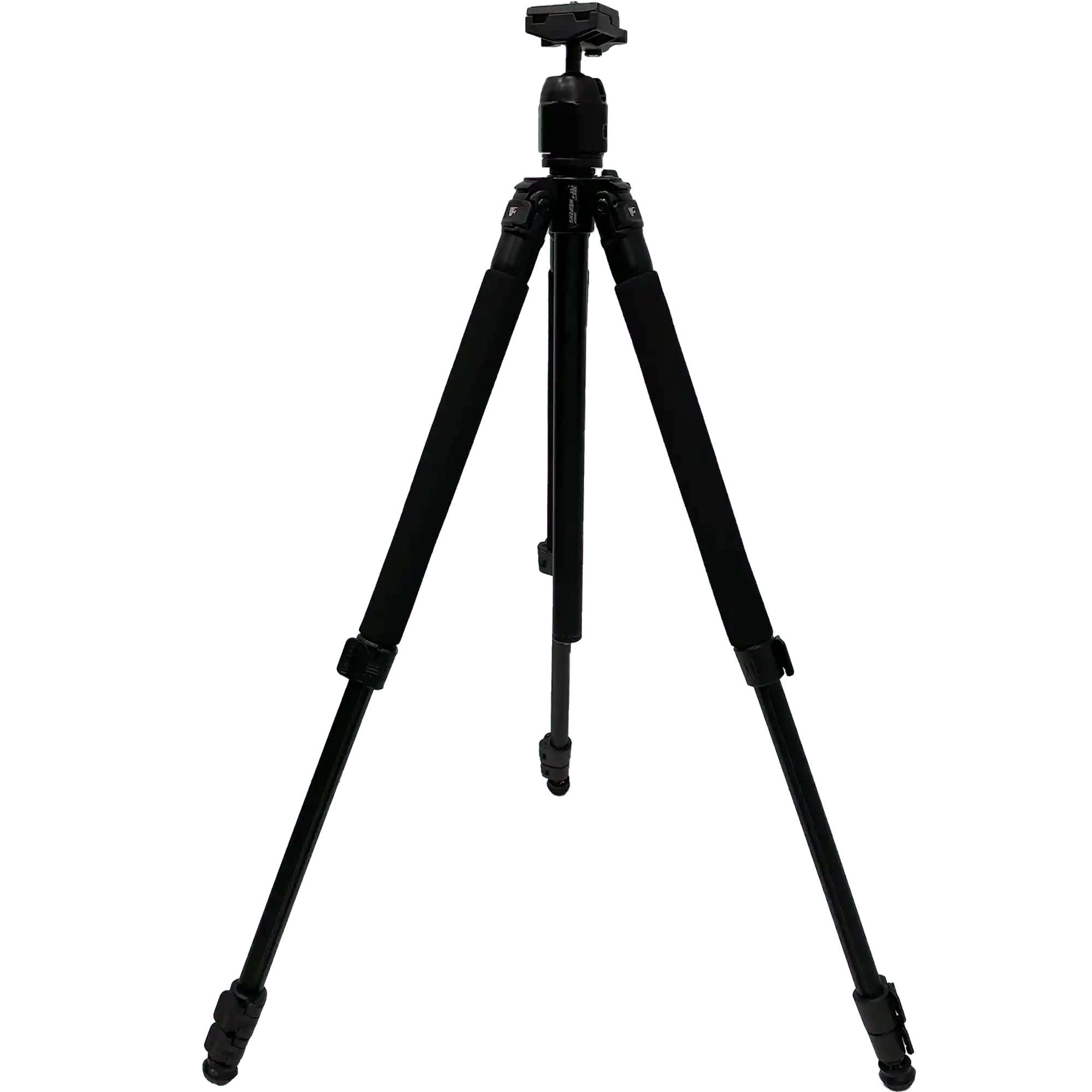
A tall tripod gives a target camera the height to clear a bench, barrier, or berm while keeping the frame stable. This 2026 guide uses the Longshot Large Tripod as the setup reference.
- Longshot Large Tripod costs $74.99 and extends to 64 inches.
- Its 7-pound load rating, tilt and pan controls support target-camera positioning.
- Set height first, lock the legs, then frame the target before firing.
Why this matters
A high viewing position only helps when it stays locked. The Longshot Large Tripod extends to 64 inches, folds to 22 inches, weighs 2.43 pounds, and supports up to 7 pounds.
That makes it a practical 2026 support option when a low bench tripod cannot clear the firing-line obstacle between the camera and target.
What you'll need
- Longshot Large Tripod.
- A compatible Longshot camera, receiver, or other device using a 1/4-20 mount.
- Firm ground or a stable bench surface.
- A safe target-camera position and an unobstructed target view.
- A phone or tablet for confirming the frame.
Set up a tall tripod for a target camera
1. Pick the viewing line before extending the legs
Stand behind the intended camera position and look for the obstacle that blocks the target: a berm, range barrier, bench edge, or uneven ground. Place the tripod where it can clear that obstacle without entering the shooting path.
The common mistake is extending the tripod first and looking for a view second. In 2026, position decides whether the extra height is useful.
2. Set the feet for the surface
The Longshot Large Tripod has rubber and spiked feet. Choose the contact that suits the actual surface, then spread the legs so the tripod has a stable footprint.
Do not force a tall tripod to balance on a narrow or loose surface. The stable ground position matters more than maximum height.
3. Extend the legs only to the height you need
The Large Tripod reaches 64 inches and folds to 22 inches. Extend the legs in stages, check the view, and stop once the camera clears the obstruction.
The right 2026 setup is not automatically the tallest one. Lower height usually adds stability when it already gives you a clean target frame.
4. Lock every leg section before mounting equipment
The tripod has four leg sections with quick-release locks. Secure them before attaching the camera or receiver, then recheck each lock after changing height.
A tall setup with one loose leg can move after you finish framing the target. Lock the legs before making any final pan or tilt adjustment.
5. Attach the device to the 1/4-20 mount
The Large Tripod uses a 1/4-20 thread and supports up to 7 pounds. Mount only compatible equipment within that published load limit.
For 2026 range planning, the load rating is a hard boundary. Use another support approach when the equipment is heavier rather than adding weight to a tripod that is already at its limit.
6. Use pan and tilt to frame the target
The ball head includes quick release and locking controls, with adjustable tilt and pan. Center the target, confirm the frame on your device, and then lock the head.
Do not leave the camera loosely aimed after framing. The point of a tall tripod is a repeatable view that stays put through the string.
7. Keep the tripod out of the firing and traffic path
Once the camera view is set, check the full range area. The tripod needs to stay clear of muzzle blast, shooters, and any route used to move safely around the firing line.
For a related process, use how to sight in a rifle using a target camera after you have a stable target view.
Troubleshooting
The target is still blocked
Reposition the tripod before adding more height. A better viewing line often matters more than extending toward the 64-inch maximum.
The tripod feels unstable
Lower the height, reset the feet, and confirm every leg lock is closed. Tall support starts with a wide, stable footprint.
The camera angle drifts
Use the ball-head locking control after the target is centered. Do not rely on friction alone to keep the camera in place.
The equipment is too heavy
The Large Tripod has a 7-pound load rating. Do not exceed it; choose a support system suited to the actual equipment weight.
The tripod cannot clear the barrier safely
Move the camera position instead of placing the tripod in an unsafe location. A clear view is never worth compromising range safety.
Tools and resources
- Longshot Large Tripod: 64-inch extended height and 7-pound load rating.
- Compatible 1/4-20 mounted camera or receiver.
- Phone or tablet: confirm the target view before firing.
Plan for height without losing stability
A tall tripod is a range-positioning tool, not just a taller version of a bench stand. The Longshot Large Tripod gives you up to 64 inches of height, but every inch changes the balance of the setup. Start by solving the camera line of sight, then add only the height that line requires.
For 2026 range setups, the best view is often lower than the tripod's maximum. A stable camera that clears the obstruction is more useful than a camera placed at full height with a narrow, unstable stance.
Use the folded size to plan transport
The Large Tripod folds to 22 inches and comes with a carrying case and shoulder strap. Pack it as a complete unit with its quick-release hardware so the range setup begins with the correct parts together.
This matters when you move between range bays or change terrain. A tripod left loose in the vehicle or range bag is more likely to lose an accessory or arrive with a leg lock partly open.
Match the feet to the surface
The Large Tripod includes rubber and spiked feet. The surface determines which contact point gives the more secure hold. Before mounting a camera, test the tripod by applying light pressure from several directions and checking that all feet stay planted.
Do not use height to compensate for an unstable ground position. Reset the feet and tripod location first, then return to the viewing angle.
Keep the load within the published limit
At 2.43 pounds, the tripod itself is portable, but the equipment mounted on top still counts. The Large Tripod has a 7-pound load-bearing rating. That figure is the limit for planning a safe and stable 2026 configuration.
A camera, receiver, accessory, or mount that pushes the setup beyond 7 pounds needs a different support plan. Do not add counterweights or improvised extensions to make an overloaded setup seem stable.
Use the ball head as the final adjustment
Set the legs and overall height before relying on tilt and pan. The ball head is designed to make final framing adjustments, not to correct for a tripod placed in the wrong location.
Once the target is centered, lock the head and confirm the image from the viewing device. If the frame still needs a major change, reposition the tripod rather than leaving the ball head at an extreme angle.
Create a clear equipment zone
A tall tripod can become a problem when it sits in a walkway, blocks a shooter, or shares a narrow bench with firearm support gear. Create a zone for the tripod that stays clear of the firing position and does not require anyone to step around the legs while shooting.
This is especially important when working around berms or barriers. The higher camera angle must never put equipment or people where they interfere with safe range operations.
Repeat the same setup across sessions
When a tall-tripod position works, note the target distance, tripod height range, and camera orientation. A repeatable setup turns the 2026 range session into a process you can use again instead of a one-off arrangement.
The goal is not to memorize every leg length. It is to know which placement, height, and framing routine produced a clear target view without compromising stability.
Watch the camera placement walkthrough
Longshot’s official FAQ video covers the placement and connection checks that belong after a tall tripod is leveled, locked, and clear of the firing area.
Watch Longshot Camera FAQ — Your Questions Answered, then confirm the live target frame from the shooting position.
FAQ
How tall is the Longshot Large Tripod?
The Longshot Large Tripod extends to 64 inches and folds to 22 inches. Use only enough height to clear the barrier or berm in your setup.
How much weight can the Longshot Large Tripod hold?
The Large Tripod has a 7-pound load-bearing rating. Do not exceed that published limit.
What mounting thread does the Large Tripod use?
The Longshot Large Tripod uses a 1/4-20 thread. Check that the camera or receiver mount is compatible before use.
Does the Large Tripod have pan and tilt controls?
Yes. It has adjustable tilt and pan controls plus a ball head with quick release and locking lever.
When should I use a tall tripod for a target camera?
Use a tall tripod when a bench edge, barrier, berm, or uneven ground blocks a lower camera position. Set the lowest stable height that gives you a clear view.
How do I stop a tall tripod from moving?
Use a firm surface, choose the correct feet, spread the legs, lock every leg section, and lock the ball head after framing the target.
One last thing
The 64-inch maximum is a capability, not a target. The most reliable 2026 target-camera view is the lowest height that clears the obstacle and stays locked.
Share:
Longshot Target Camera by Distance: 2026 Guide
How to Use a Shooting Range App in 2026