A Longshot target camera lets you see impacts from the shooting position instead of walking downrange after every group. This 2026 guide matches your normal shooting distance to the Longshot setup that fits it, from short-range practice to 2-mile ELR work.

- For 100 yards, the Ranger is the direct fit for short-range target work.
- For 300 yards, the Marksman is the clear Longshot target camera choice.
- For 2 miles, the LR-3 is the purpose-built Longshot target camera.
- At 1,000 yards, confirm the current stated range before buying.
Why distance is the first decision
A target camera has one job: give you a useful view of impacts from the firing line. Distance determines how much wireless range you need, where the camera sits beside the target, and which system is worth bringing to the range.
Longshot target cameras create a direct wireless connection between the camera and your phone or tablet. In 2026, that matters at remote ranges because you do not need cell service, a hotspot, or range Wi-Fi to see the target.
Do not buy a 2-mile system for a 100-yard zero just because the number sounds better. The right Longshot target camera is the one that covers your real shooting distance with room for your normal setup.
What to look for in a target camera by distance
Your longest normal range day
Choose for the farthest distance you shoot regularly, not the rare trip you take once a year. A shooter who zeros at 100 yards and practices at 200 yards has a different need from a match shooter who lives on a 300-yard range.
A safe downrange position
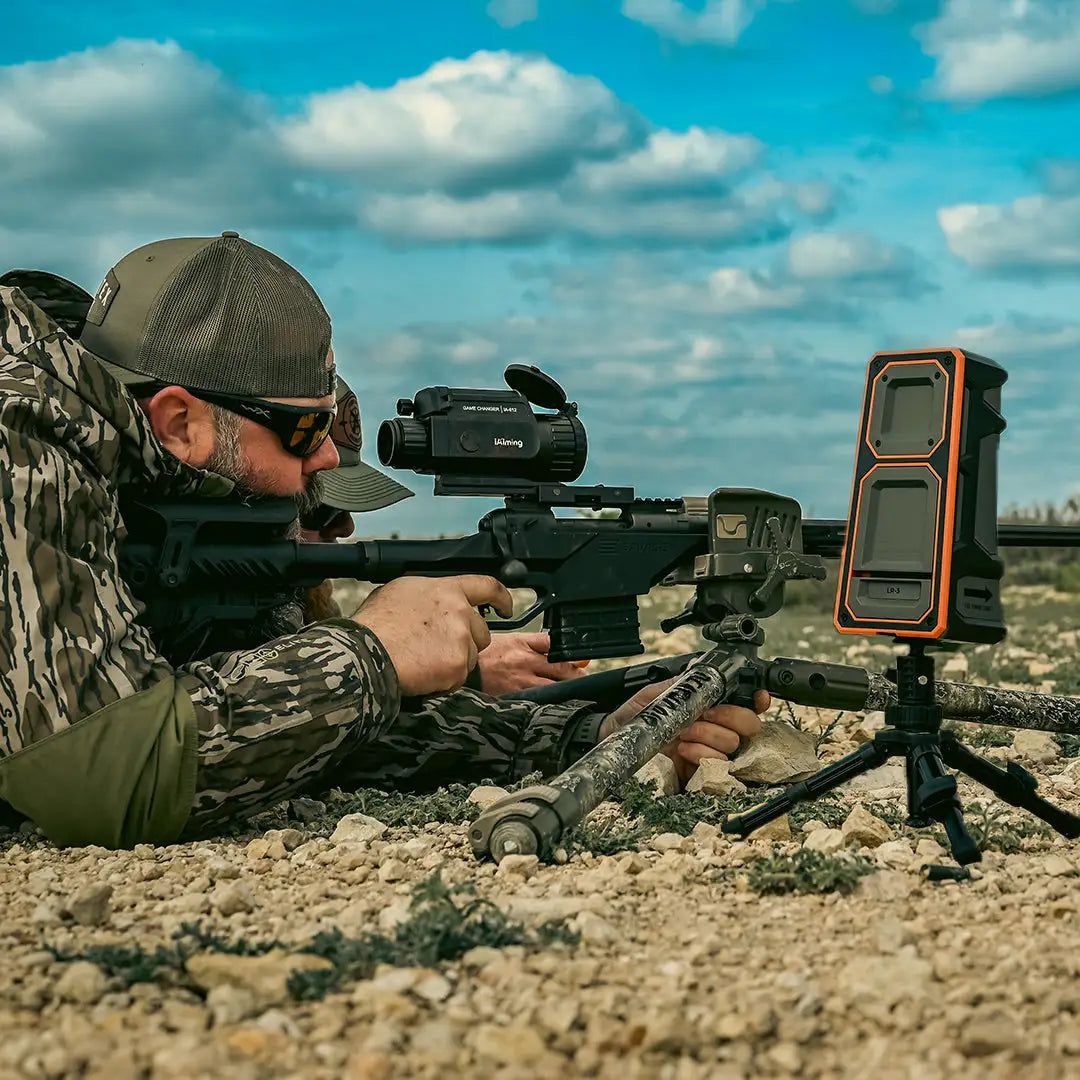
The camera belongs near the target, outside the bullet path. For the Marksman and LR-3, Longshot's current guidance is approximately 10 to 15 feet in front of and offset slightly to the side of the target.
A useful firing-line screen
Your phone or tablet is your monitor. Charge it, set the brightness for the light conditions, and put it where you can read it without breaking position.
The range you actually need
At 1,000 yards and beyond, terrain, obstacles, and a clear wireless path matter. A stated maximum range does not replace a careful setup check.
The 100-yard choice: Ranger
The Longshot Ranger is built for targets up to 100 yards. It is the direct choice for short-range rifle zeroing, rimfire work, pistol practice, and archery where a live target view saves repeated walks downrange.
The Ranger uses a 2MP camera and connects to a phone or tablet through the Longshot app. It is a compact system for short distances, not a reduced version of an ELR camera.
Verdict: Buy the Ranger when 100 yards is your regular maximum. In 2026, it is the practical Longshot target camera for a short-range bay.
The 300-yard choice: Marksman
The Longshot Marksman is built for wireless video transmission up to 300 yards. It streams a live UHD target view to a mobile device and has up to 9 hours of battery life on a single charge.
The Marksman is the better fit when your routine includes longer zero confirmation, load development, or range sessions where spotting impacts through glass becomes slow and inconsistent. Position the camera near the target and keep the live screen at the firing line.
Verdict: Buy the Marksman when you normally shoot to 300 yards. It is the middle ground in the 2026 Longshot target camera lineup and it can later be upgraded to an LR-3.
The 1,000-yard decision: confirm before you buy
At 1,000 yards, assumptions get expensive. Check the current stated range for the Longshot system you are considering, then match it to the distance you actually shoot.
A 1,000-yard setup needs a clear wireless path, careful camera placement, and a stable viewing device at the shooting position. Test the connection before a match, practice block, or load-development string.
Verdict: Consider the Longshot system whose current stated range covers your 1,000-yard use with margin. Do not choose from an old listing or an assumed specification in 2026.
The 2-mile choice: LR-3
The Longshot LR-3 is built for wireless video transmission up to 2 miles. It streams a live UHD target view to a mobile device, supports multiple cameras connected to one receiver, and has up to 9 hours of battery life.
The LR-3 is for ELR training, long-distance competition practice, and ranges where visual confirmation through a scope becomes unreliable. Its multi-camera capability is useful when you need more than one target or angle in the same session.
Verdict: Buy the LR-3 when 2-mile capability is part of your real shooting plan. In 2026, it is the Longshot target camera for long-distance feedback without walking downrange.
What to avoid
Buying for the biggest number
A 2-mile system is not automatically right for a 100-yard zero. Start with your normal distance and move up only when your real shooting requires it.
Putting the camera in the bullet path
Keep the camera offset. Follow product guidance and your range's safety rules before starting any session.
Ignoring the viewing device
A dead phone, dim screen, or untested app connection stalls a range day. The live screen is part of the target-camera setup.
Distance comparison
| Normal target distance | Longshot choice | What matters most | Verdict |
|---|---|---|---|
| Up to 100 yards | Ranger | Compact live view | Buy |
| Up to 300 yards | Marksman | Live UHD target view | Buy |
| Around 1,000 yards | Confirm current system range | Clear wireless path | Consider |
| Up to 2 miles | LR-3 | Long-distance and multi-camera capability | Buy |
Watch Longshot at long range
The official Longshot overview shows how a target camera keeps impacts visible from the shooting position as distance increases.
Watch Longshot Cameras — The Ultimate Shooting Experience, then use the distance guide above to choose the system that fits your range.
FAQ
What Longshot target camera is best for 100 yards in 2026?
The Longshot Ranger is built for targets up to 100 yards. It is the direct fit for short-range target practice, zeroing, and archery.
Which Longshot target camera reaches 300 yards?
The Longshot Marksman is built for wireless video transmission up to 300 yards. It streams a live UHD target view to a phone or tablet.
Which Longshot target camera reaches 2 miles?
The Longshot LR-3 is built for wireless video transmission up to 2 miles. It is the long-distance option for ELR shooting and multi-camera setups.
Do Longshot target cameras need cell service?
No. Longshot target cameras create a direct wireless connection to your mobile device, so cell service and range Wi-Fi are not required.
Where should I place a Longshot target camera?
For the Marksman and LR-3, Longshot recommends placing the camera about 10 to 15 feet in front of and offset slightly to the side of the target. Keep it outside the bullet path.
Can the LR-3 use more than one camera?
Yes. The LR-3 supports multiple cameras connected to a single receiver, allowing different targets or angles to be viewed at the same time.
One last thing
The best Longshot target camera is not the most complicated one. It is the system that lets you stay in position, see the impact, make a correction, and get back to the next shot.
Share:
Mini Tripod Target Camera Setup: 2026 Bench Guide
Tall Tripod Target Camera Setup: 2026 Guide