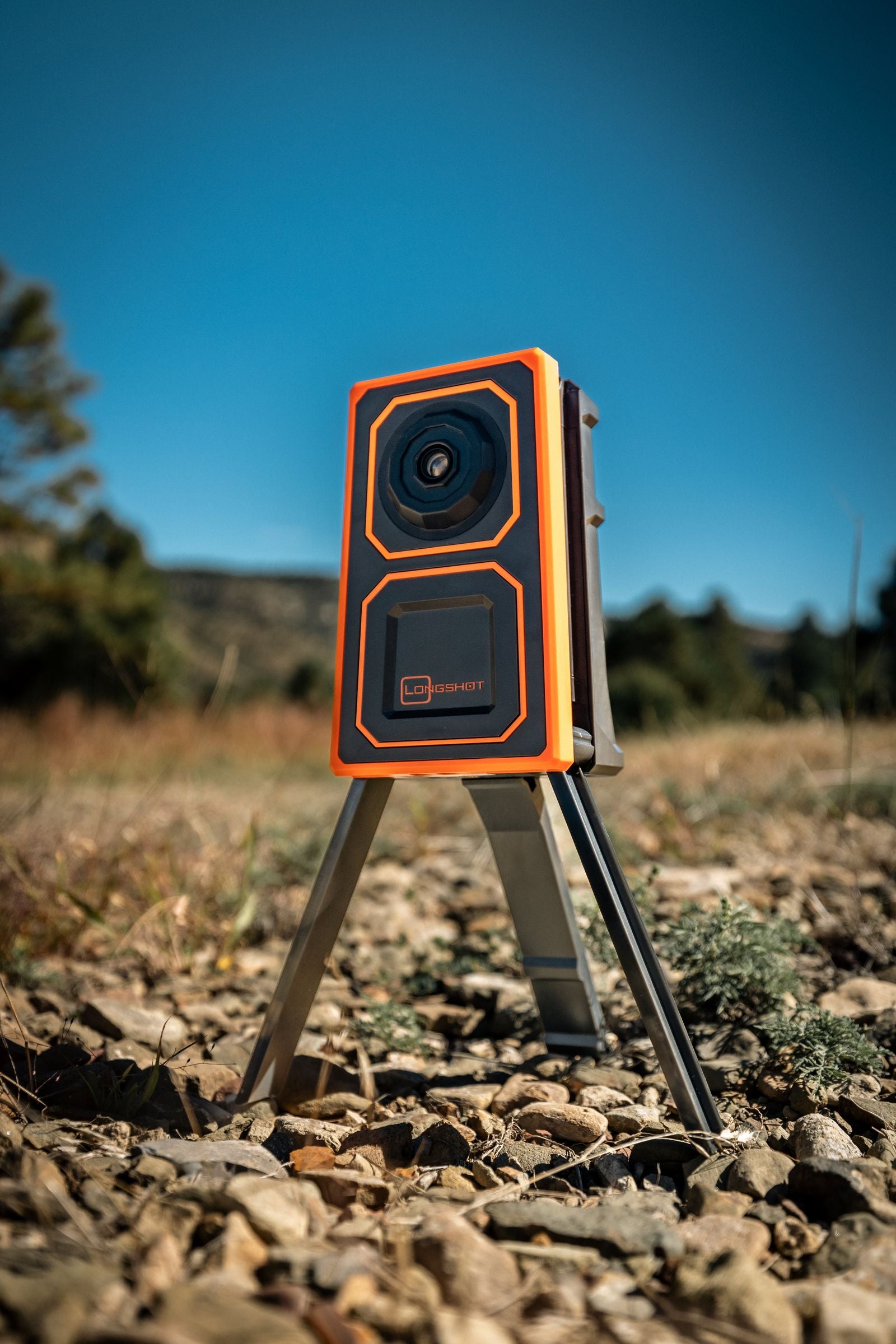
Mirage can hide bullet impacts even when your spotting scope has enough magnification. A target camera solves the problem by placing the lens near the paper, then sending that close view back to your phone or tablet.
- Mirage distorts the long viewing path between the bench and target.
- A target camera sees the paper from close range.
- Ranger+ covers target viewing up to 1,000 yards.
- LR-3 carries a 2-mile guarantee for long-range and ELR shooting.
- No cell service or existing Wi-Fi is required.
Why This Matters in 2026
More magnification does not remove hot air. On a bright range, the target can shimmer, shift and lose contrast through the optic even when the rifle and tripod are steady.
A Longshot LR-3 target camera changes where the image starts. Instead of viewing the paper through the entire shooting distance, the camera sits near the target and sends the image through its own wireless link.
The result is a more direct target view for long-range and ELR shooting in 2026.
What Mirage Does to the Target View
Mirage bends light as air temperatures change. Through an optic, the target can appear to move or blur even though the paper has not moved.
That creates three common problems:
- Small bullet holes disappear.
- Tight groups merge into one dark area.
- The aiming point looks less stable than it really is.
A higher magnification setting can enlarge the distortion along with the target. The issue is not always the quality of the scope. It is the long column of moving air between the lens and the paper.
Why a Target Camera Works Differently
A target camera moves the viewing lens downrange. The camera sees the paper from a short distance, while the receiver carries the image back to the firing line.
Longshot’s current placement guidance starts around 10 to 20 feet from the target, adjusted for target size and model instructions. That short camera-to-paper view does not depend on reading a bullet hole across 1,000 yards or more.
Watch the official Where Should You Place Your Longshot Target Camera? video for the 2026 framing method.
What This Solves at the Bench
You stop chasing a disappearing hole
If the first impact is visible on the camera feed, you do not need to add rounds just to make the group easier to find.
You can separate target feedback from wind reading
Mirage still matters as a condition for the bullet’s path. The target camera’s job is narrower: show where the bullet landed.
You keep the paper visible during changing conditions
The live target remains on the screen even as the view through the scope becomes less useful during the day.
You can save the evidence
The Longshot app can save photos, mark shots and record a session. The impact view can be reviewed after the heat and wind have changed.
Ranger+ for Targets Up to 1,000 Yards
The Longshot Ranger+ is the compact 2026 choice for target viewing up to 1,000 yards. The current product information lists 1920 x 1080 resolution, a 6-hour battery and an included receiver.
Ranger+ costs $449. It is the direct buy when your range stays inside 1,000 yards and the main problem is seeing impacts through distance and changing air.
LR-3 for Long Range and ELR
LR-3 is the purpose-built option for longer distances. It carries a 2-mile guarantee, uses 2688 x 1512 imagery, lists 9 hours of battery life and supports additional cameras.
LR-3 starts at $999 and includes a hard case, camera, receiver, two chargers and two tripods. Choose it when the 2026 plan goes beyond 1,000 yards or needs a complete ELR system.


A Simple Mirage-Day Workflow
Set the camera before the heat builds
Place and frame the camera during an authorized cold range. Confirm the full target while conditions are easier to work in.
Keep the full target in view
Do not crop tightly around the expected group. Mirage-day corrections can move the group, and a wide view protects the context.
Check the live feed before loading
Connect to the Longshot network and confirm the target number, image and battery status.
Fire a short planned string
Make the rifle safe and review the target after the group. Use the camera to identify impact location, not to replace the shooting process.
Mark the impacts
Use shot markers when sequence matters. If the target becomes crowded, the official Blinker video shows how the app can help find the newest hole.
Save the target and conditions
Record the date, distance, rifle, load and basic conditions. The 2026 image becomes more useful when it can be matched to the session.
What a Target Camera Does Not Fix
A target camera does not remove wind, change bullet flight or improve an unstable rifle. Mirage remains useful information about conditions between the firing line and target.
The camera solves the visibility problem. It tells you where the bullet arrived even when the normal sight picture is difficult.
Common Mistakes
Adding magnification until the image gets worse
Back the optic down when mirage dominates the view. Use the target camera for impact confirmation.
Mounting too close to the paper
Follow the model instructions and frame the full target. A close camera that crops the paper creates a new visibility problem.
Ignoring receiver placement
Keep the receiver stable and away from large obstructions. The camera-to-target view can be clear while the wireless path is poorly positioned.
Confusing target view with wind data
The camera shows the impact. Read conditions with the appropriate range process and equipment.
Firing extra rounds before checking the screen
One visible impact is more useful than several overlapping holes added out of uncertainty.
FAQ
Why does mirage hide bullet holes?
Moving layers of heated air distort the long optical path, reducing the clarity and contrast of small impacts.
Will more magnification fix mirage?
No. More magnification can enlarge the distortion along with the target. A target camera shortens the viewing distance to the paper.
How does a target camera help with mirage?
The camera sits near the target and sends a close image back to the firing line instead of viewing through the full shooting distance.
What target camera works at 1,000 yards?
Ranger+ supports target viewing up to 1,000 yards and currently costs $449.
What target camera works for ELR shooting?
LR-3 carries a 2-mile guarantee, uses a receiver-based system and starts at $999.
Does a target camera remove the need to read wind?
No. It shows impact location; wind and other shooting conditions still affect the bullet’s path.
Does Longshot need range Wi-Fi?
No. Longshot systems create their own wireless connection and do not need existing Wi-Fi or cell service.
One Last Thing
Mirage can make the target look like it is moving, but the paper is still downrange collecting real impacts. In 2026, a Longshot target camera puts a lens beside that paper and brings the answer back to the bench.
Share:
Spend More Range Time Shooting, Not Walking | 2026