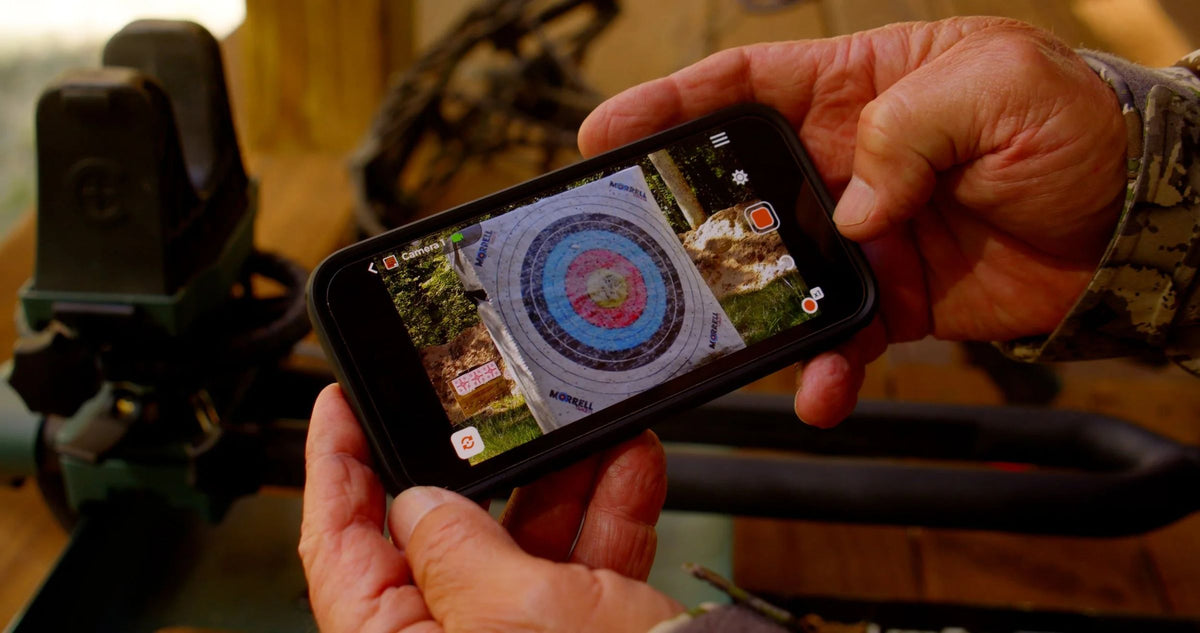
A target camera is worth it for hunting if you zero a rifle before season, verify crossbow impacts past 60 yards, or run guided hunts where clients need to see their own hits without a hike to the target. It pays for itself the first weekend it saves two trips downrange, a spooked deer pattern, or a missed zero discovered at the worst possible moment in 2026's early archery season.
- A target camera is worth it for hunting when it replaces walking downrange to check zero or crossbow groups before season.
- Longshot cameras read impacts up to 2 miles away with no Wi-Fi or cell service required, which matters at remote camps and public land.
- Casual 50-yard plinking rarely justifies the cost — a spotting scope covers that distance fine.
- Hunting guides and outfitters get the fastest payback because clients see their own hits without a rangemaster walking targets all day.
Why this matters
Most hunters don't miss because of a bad rifle. They miss because the zero drifted since the last range trip, or because nobody actually confirmed point of impact past 200 yards before opening morning. A target camera closes that gap by putting the impact on a tablet screen in the shooting position, shot by shot, instead of asking you to guess from mirage or walk 300 yards and back for every group.
For bowhunters and crossbow shooters, the same problem shows up closer in. A target camera built for crossbow hunters catches broadhead impact points at 40-80 yards, where a miss on paper often means a miss on an animal. That's a different use case than long-range rifle work, and it changes which camera actually makes sense.
Is a target camera worth it for hunting?
The honest answer depends on what you're checking and how far. Here's how a target camera stacks up against the two other common methods hunters use to confirm impacts.
| Method | Time per shot check | Works past 300 yards | Verdict for hunting prep |
|---|---|---|---|
| Walk downrange | 2-5 minutes round trip | Yes, but exhausting | Skip for repeated zeroing |
| Spotting scope | Instant, but mirage-limited | Inconsistent past 400 yds in heat | Fine for casual close-range checks |
| Target camera | Instant, on-screen | Yes, engineered to 2 miles | Worth it for pre-season zeroing and guided hunts |
A camera doesn't replace a spotting scope for glassing game. It replaces the guesswork and the boot leather for confirming exactly where a bullet or bolt landed, which is the part that actually determines whether your rifle is ready for opening day.
For pre-season rifle zeroing: worth it
Most hunting rifles get shot two or three times a year — once to confirm zero, maybe once more after a scope bump. A camera turns that into a five-minute check instead of a 40-minute range session with three trips downrange. The entry-level Marksman camera covers this job at typical zero-confirmation distances and pairs with a tablet so you see the hole appear on screen after each shot. Verdict: Buy if you zero once or twice a year and want the process done in one trip instead of three.
For crossbow and archery hunters: worth it
Broadhead flight isn't the same as field-point flight, and most hunters only find that out by walking to the target after every group. A camera reading a 40-80 yard target gives instant feedback shot to shot, which matters more for archery tuning than for rifle work because grouping problems at bow distances are subtle and easy to miss from the shooting line. Verdict: Buy if you shoot broadheads through paper or foam more than a few times a season.
For hunting guides and outfitters: worth it
This is where the payback is fastest. A guide running four or five clients through a pre-hunt zero check in one morning can't afford to walk targets between every group. Target cameras built for hunting guides and outfitters let each client see their own impact on a tablet at the bench, which cuts session time and keeps clients confident going into the field. Verdict: Buy for any operation running repeat client zero checks in 2026.
For casual 50-yard plinking: skip it
If the only shooting you do is informal 50-yard sight-in with no repeat sessions and no guided clients, a basic spotting scope or the naked eye covers it. The value of a camera comes from repetition — checking the same target across multiple trips, multiple shooters, or multiple distances. One-off close-range shooting doesn't generate enough repeat trips to justify the setup. Verdict: Skip unless you're also shooting past 200 yards or running more than one shooter through the same session.


Why the value varies by hunter
- Distance to target — a 50-yard bow tune needs less camera than a 500-yard rifle zero, and the right unit changes with that distance.
- Number of shooters per session — one guide running five clients gets more value per dollar than one hunter shooting solo twice a year.
- Access to Wi-Fi or cell service — remote camps and public land benches need a system that doesn't rely on a signal, which rules out phone-tethered options.
- Frequency of zero checks — a rifle that gets scoped once and never touched again doesn't need repeat verification; one that travels for multiple hunts does.
- Terrain and berms — ranges with tall backstops or angled shooting lanes make walking downrange slower, which raises the value of not doing it.
- Season prep timeline — checking zero the week before opening day under time pressure is exactly when a five-minute camera check beats a 40-minute walk-heavy session.
Related questions hunters ask
Does a target camera work at a remote hunting camp with no signal?
Yes — Longshot cameras are built to work with no Wi-Fi or cell service required, which is the point for camps and public land benches with no connectivity. The camera and tablet talk to each other directly rather than routing through a network.
How far can a target camera actually see?
Longshot's camera lineup is engineered to read impacts up to 2 miles away, well past what a hunter needs for either bow tuning or rifle zeroing. Shorter-range models cover typical hunting distances at a lower cost than the longest-range units.
Is a target camera better than a spotting scope for hunting prep?
A target camera and a spotting scope solve different problems — the scope is for glassing game, the camera is for confirming exactly where a shot landed without walking. Most serious hunters end up using both rather than choosing one over the other.
FAQ
Is a target camera worth it for hunting in 2026?
Yes, if you zero a rifle before season, tune broadheads, or run guided client sessions where repeat trips downrange cost real time. Casual one-off 50-yard sight-in rarely justifies the cost.
Do target cameras work without Wi-Fi at a hunting camp?
Yes, Longshot cameras are built to operate with no Wi-Fi or cell service required, which is why they work at remote camps and public land where connectivity is unreliable.
How far can a hunting target camera see downrange?
Longshot's camera systems are engineered to read impacts up to 2 miles away, far beyond the distances most hunters need for zeroing or archery tuning.
Can a target camera replace a spotting scope for hunting?
No, a target camera confirms shot placement on a specific target while a spotting scope is for glassing live game at a distance. Most hunters use both for different jobs.
Are target cameras good for crossbow and bow hunters?
Yes, a camera set on a 40-80 yard target gives instant feedback on broadhead groups shot to shot, which catches tuning issues that are easy to miss from the shooting line.
Do hunting guides and outfitters use target cameras?
Yes, guides running multiple clients through pre-hunt zero checks use target cameras so each shooter sees their own impact on a tablet without walking targets between groups.
What distance camera do I need for rifle hunting prep?
Most rifle hunters zero and confirm between 100 and 300 yards, which entry to mid-range camera models cover without needing the longest 2-mile-rated units.
One last thing
The detail hunters overlook: a target camera doesn't just save time, it changes what you're willing to check. Hunters who own one tend to confirm zero after every scope bump, every travel trip, every ammo lot change — because the check costs five minutes instead of forty. That habit change, more than the camera itself, is usually what prevents the missed shot in 2026's field season.
Share:
Wi-Fi Spotting Scope Camera Without Internet